
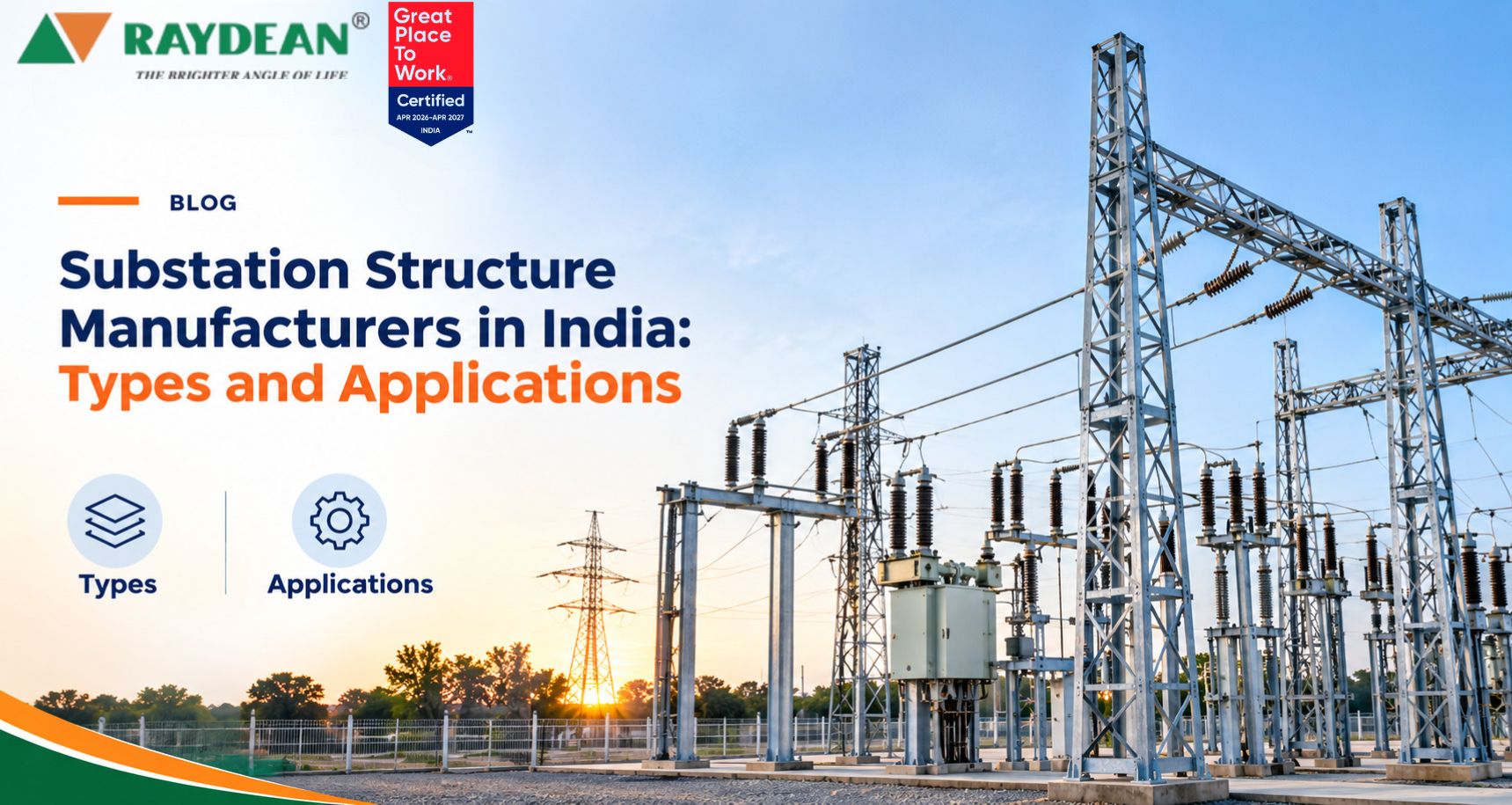
Substation Structure Manufacturers in India:Types and Applications
-

-

-

No Comments
Substation Structure Manufacturers in India:Types and Applications
Introduction
Substations play a vital role in India’s electrical power infrastructure by ensuring the safe and efficient transmission and distribution of electricity. From power generation plants to industrial facilities and renewable energy projects, substations require strong, durable, and precisely engineered structures to support electrical equipment and maintain reliable operations.
With the growing demand for electricity, renewable energy integration, and grid expansion, the need for high-quality substation infrastructure is increasing. This has made choosing reliable Substation Structure Manufacturers in India an important decision for power utilities, EPC contractors, and infrastructure developers.
Raydean Enterprises is a trusted name in structural engineering and manufacturing, delivering customized steel structures for power transmission, substations, and renewable energy applications. Understanding the different types of substation structures and their applications can help project developers select the right solutions for long-term performance and safety.
What Are Substation Structures?
Substation structures are engineered steel frameworks designed to support electrical equipment, conductors, busbars, insulators, and other essential components within a substation. They provide mechanical strength, maintain electrical clearances, and ensure the stability of equipment under different environmental and operational conditions.
These structures are generally manufactured using high-strength structural steel and protected through hot-dip galvanization to improve corrosion resistance and durability.
Types of Substation Structures and Their Applications
Different substation structures serve specific purposes depending on voltage levels, equipment requirements, and site conditions. The major types include:
1. Gantry Structures
Gantry structures are essential components used at the entry and exit points of substations. They support overhead transmission lines and provide secure connections between incoming or outgoing power lines and substation equipment.
Applications:
- Supporting incoming and outgoing transmission lines.
- Maintaining required conductor clearances.
- Connecting transmission networks with substations.
- Supporting high-voltage power evacuation systems.
2. Busbar Support Structures
Busbar support structures hold busbars in position within the substation. They help maintain proper spacing, alignment, and electrical clearances while supporting the mechanical loads associated with electrical conductors.
Applications:
- Supporting electrical busbar systems.
- Connecting transformers, feeders, and switchgear.
- Maintaining safe conductor arrangements.
- Improving operational reliability in high-voltage substations.
3. Equipment Support Structures
These structures are specifically designed to support heavy electrical equipment such as circuit breakers, current transformers, voltage transformers, disconnectors, and lightning arresters.
Applications:
- Supporting high-voltage electrical equipment.
- Providing stable mounting platforms.
- Maintaining equipment alignment and accessibility.
- Ensuring safe and organized substation layouts.
4. Lightning Mast Structures
Lightning masts are vertical steel structures designed to provide protection against direct lightning strikes. They help protect sensitive electrical equipment and improve the overall safety of substation installations.
Applications:
- Protecting transformers and switchyards.
- Providing lightning protection for outdoor substations.
- Safeguarding electrical installations from lightning-related damage.
- Supporting lighting arrangements where specified.
5. Cable Support Structures
Cable support structures are used to organize and support electrical cables within substations. They help maintain proper cable routing, separation, and accessibility for inspection and maintenance.
Applications:
- Supporting power and control cables.
- Organizing cable routes.
- Improving maintenance accessibility.
- Reducing cable congestion in electrical installations.
Where Are Substation Structures Used?
Substation structures are important across multiple sectors where reliable electricity transmission and distribution are essential.
| Industry | Major Application |
| Power generation | Supporting switchyards and power evacuation systems |
| Transmission utilities | Connecting high-voltage transmission networks |
| Solar power plants | Supporting electrical infrastructure for grid connectivity |
| Industrial facilities | Ensuring reliable power distribution |
| Infrastructure projects | Supporting electrical substations and utility networks |
| Renewable energy | Integrating solar and wind power with the electricity grid |
What Should You Consider When Choosing Substation Structure Manufacturers in India?
Selecting the right manufacturer directly affects structural reliability, project timelines, and long-term maintenance requirements. Consider these important factors:
- Material Quality: Choose manufacturers using suitable structural steel grades such as IS 2062, as specified by project requirements.
- Engineering Capabilities: Look for expertise in structural analysis, load calculations, detailed drawings, and customized designs.
- Corrosion Protection: Hot-dip galvanization helps protect steel structures against rust and harsh environmental conditions.
- Manufacturing Capacity: Large-scale production capabilities are important for meeting bulk orders and project deadlines.
- Quality Assurance: Check material traceability, dimensional accuracy, welding quality, and inspection procedures.
- Industry Experience: Prefer a manufacturer with experience in power transmission, substations, and infrastructure projects.
Why Choose Raydean Enterprises for Substation Structures?
Raydean Enterprises combines engineering expertise, manufacturing capabilities, and quality-focused production to deliver dependable structural solutions for India’s growing power infrastructure.
As an established Steel Manufacturing Company, Raydean focuses on customized steel fabrication and structural engineering for demanding industrial and energy applications.
Key strengths include:
- Customized substation structures designed according to project specifications.
- Manufacturing of gantries, busbar frameworks, equipment supports, and lightning masts.
- High-strength steel construction with corrosion-resistant galvanization.
- In-house engineering and fabrication capabilities.
- Solutions designed for different substation configurations and voltage requirements.
- Experience across renewable energy, transmission, and infrastructure sectors.
Raydean also serves the renewable energy industry as a Solar Structure Manufacturer in India, and Solar Structure Fabricator. Its wider portfolio includes solar mounting systems, tracking solutions, and EPC-related structural requirements.
As a Solar Structure Company, Raydean supports ground-mounted and rooftop solar projects. Its capabilities also extend to solar tracking systems as a Solar Tracker Manufacturer and structural solutions for renewable energy projects as a Solar EPC Structure Manufacturer.
This diversified manufacturing expertise makes Raydean Enterprises a valuable partner for infrastructure developers seeking reliable and application-specific steel structures.
Conclusion
Substation structures are essential for maintaining the safety, stability, and efficiency of India’s electrical power network. From gantry and busbar structures to equipment supports and lightning masts, every component plays an important role in reliable substation operations.
Choosing experienced Substation Structure Manufacturers in India ensures better engineering, dependable material quality, corrosion protection, and long-term structural performance.
Raydean Enterprises delivers customized substation and steel structural solutions backed by engineering expertise and manufacturing capabilities. If you are planning a power transmission, substation, or renewable energy project, connect with Raydean Enterprises to discuss your structural requirements and find a reliable manufacturing partner.
Frequently Asked Questions (FAQs)
1. What are substation structures?
Substation structures are steel frameworks used to support electrical equipment, busbars, conductors, transmission lines, and lightning protection systems. They ensure structural stability and maintain safe electrical clearances.
2. What are the main types of substation structures?
The main types include gantry structures, busbar support structures, equipment support structures, lightning masts, and cable support structures. Each type serves a specific function within a substation.
3. Which material is commonly used for substation structures?
Structural steel is commonly used because of its strength, durability, and fabrication flexibility. Hot-dip galvanization is generally used to improve corrosion resistance and extend service life.
4. How do I choose reliable substation structure manufacturers in India?
Consider the manufacturer’s engineering expertise, steel quality, fabrication capabilities, galvanization facilities, quality control processes, production capacity, and experience with similar projects.
5. Does Raydean Enterprises manufacture customized substation structures?
Yes. Raydean Enterprises provides customized substation structures, including gantries, busbar frameworks, equipment support structures, and lightning masts, based on project specifications and application requirements.
Categories
- All (21)
- HDG Structure (1)
- Pre Galvanized Structure (2)
- Rooftop Solar Structure (3)
- Solar Mounting Structure (8)
- Transmission Towers (3)
- Telecom Tower (3)
- Solar Structure (2)
- Agrivoltaics (1)
- PM Surya Ghar Yojana (1)
- Ground based telecom tower (1)
- Substation Structure (1)
Latest Post



Popular Tags
- Monopole Transmission Tower in india
- Substation Structure manufacturers in india
- HDG Structure vs. Pre-Galvanized Structure
- Lattice Transmission Towers in india
- substation structures manufacturers
- HDG structure in jaipur
- Best Telecom Tower Manufacturer in India
- Pre-Galvanized Structure
- telecom tower manufacturer
- HDG Structure