Top Solar EPC Companies in India: How to Choose the Right One
-

-

-

No Comments
Top Solar EPC Companies in India: How to Choose the Right One
India’s solar energy sector is expanding rapidly, creating strong demand for reliable solar EPC companies that can design, supply, install, and commission complete solar power systems. As solar projects become larger and more technically demanding, choosing the right Engineering, Procurement and Construction (EPC) partner is essential for long-term performance, safety, and project value. According to the Ministry of New and Renewable Energy (MNRE), India had more than 168 GW of installed solar capacity as of August 31, 2026, including utility-scale, rooftop, hybrid, and off-grid installations.
What Is a Solar EPC Company?
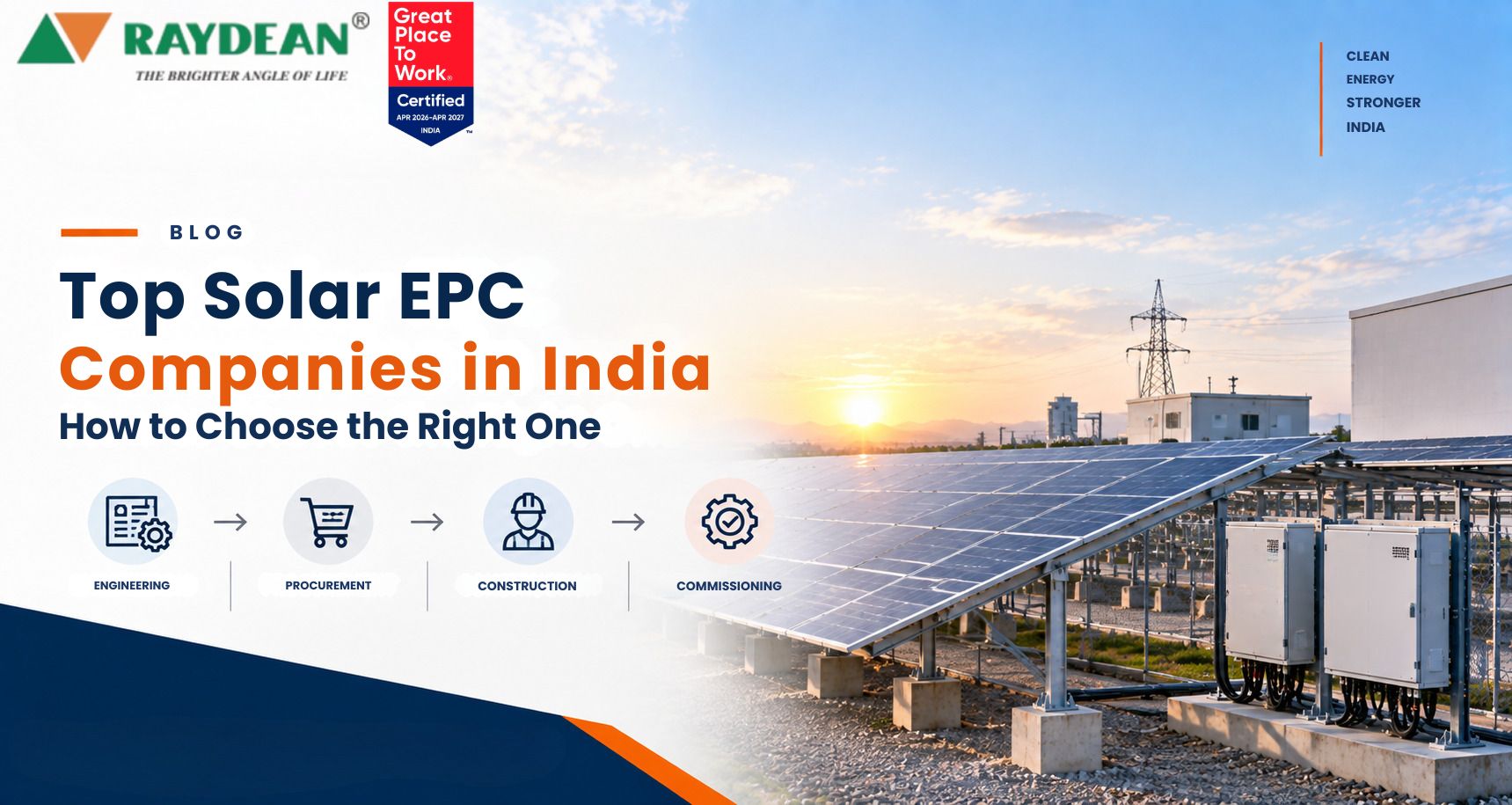
A solar EPC company manages the major stages of a solar project under one integrated framework. EPC stands for Engineering, Procurement, and Construction. A professional solar EPC company typically handles:
- Site assessment and feasibility studies
- Solar system design and engineering
- Equipment and component procurement
- Solar mounting structure selection
- Electrical installation
- Civil and structural work
- Project construction
- Testing and commissioning
- Operations and maintenance support
This integrated approach can simplify project management because multiple technical activities are coordinated through one EPC partner. For example, a complete solar power plant may require PV modules, inverters, transformers, cables, monitoring systems, foundations, and galvanized steel mounting structures. Raydean provides turnkey EPC solutions covering ground-mounted, rooftop, hybrid, and off-grid solar projects.
Why Choosing the Right Solar EPC Company Matters
Selecting an EPC contractor based only on the lowest quotation can create problems later. Solar projects are designed for long-term operation, so engineering quality, structural durability, component selection, installation standards, and after-sales support all matter.
A capable EPC partner can help you achieve:
- Better system reliability
- Optimized project design
- Efficient installation
- Structural safety
- Reduced maintenance requirements
- Better project coordination
- Compliance with applicable standards
- Long-term operational performance
The right company should therefore be evaluated on its technical capabilities, manufacturing strength, project experience, quality systems, and service support rather than price alone.
7 Factors to Consider When Choosing a Solar EPC Company
1. Check EPC Experience and Project Portfolio
Start by reviewing the company’s experience in projects similar to yours. A residential rooftop project, industrial rooftop installation, agricultural solar plant, and utility-scale solar park can have very different engineering requirements.
Look for experience in:
- Rooftop solar
- Ground-mounted solar
- Industrial and commercial projects
- Utility-scale solar plants
- Hybrid and off-grid systems
- Government and infrastructure projects
A detailed project portfolio can provide a better indication of practical execution capability than general marketing claims.
2. Evaluate Engineering and Design Capabilities
Engineering quality directly affects the safety and performance of a solar installation. A reliable EPC company should be capable of considering factors such as:
- Site conditions
- Wind loads
- Solar orientation
- Module configuration
- Foundation requirements
- Electrical design
- Drainage and access
- Maintenance requirements
Structural engineering is particularly important because solar panels depend on mounting systems for secure and stable installation.
3. Look at Solar Structure Manufacturing Capability
The mounting structure is one of the most important physical components of a solar project. Buyers should therefore understand whether an EPC company manufactures structures itself or relies entirely on third-party suppliers. A capable EPC Structure Manufacturer can provide better control over structural design, fabrication, quality, and delivery.
When evaluating an EPC Steel Structure Manufacturer, check:
- Steel grade and material quality
- Galvanization or corrosion protection
- Structural design standards
- Manufacturing capacity
- Quality-control procedures
- Fastener specifications
- Customization capability
Raydean specializes in designing and manufacturing solar module mounting structures along with telecom towers and transmission line structures.
4. Assess Rooftop and Ground-Mount Expertise
Different solar applications require different structural solutions. For rooftop installations, the EPC partner should understand roof type, load capacity, waterproofing, wind exposure, and installation constraints. A specialized EPC Rooftop Structure Manufacturer can design mounting systems according to the characteristics of the building and solar modules.
For ground-mounted projects, terrain, soil conditions, foundation design, wind loading, row spacing, and accessibility become important.
5. Verify Quality, Standards and Certifications
Quality should be evaluated throughout the project—not only after installation. Ask potential EPC companies about:
- Material inspection
- Manufacturing quality control
- Welding procedures
- Galvanization quality
- Electrical testing
- Installation inspections
- Documentation and testing reports
- Applicable IS and IEC standards
MNRE also maintains the Approved List of Models and Manufacturers (ALMM), with current updates published through its official portal. Project owners should check applicable regulatory requirements for their specific project.
6. Compare Procurement and Delivery Capability
An EPC company needs a dependable supply chain to keep projects on schedule. Ask about manufacturing capacity, component sourcing, inventory planning, logistics, and delivery timelines. An established EPC Structure Supplier can be particularly valuable for projects requiring large quantities of mounting structures within a defined construction schedule.
7. Consider After-Sales Support and O&M
The EPC relationship should not end immediately after commissioning.
- Preventive maintenance
- Performance monitoring
- Troubleshooting
- Replacement support
- Inspection services
- System upgrades
- Long-term O&M
Strong post-installation support can help identify performance issues before they become major problems.
Solar EPC Structures for Complete Infrastructure Solutions
A solar project may require more than conventional module mounting systems. Depending on the application, specialized infrastructure can include mounting frames, elevated structures, high-mast systems, transmission structures, and other steel solutions. A Solar EPC Structure Manufacturer with broader fabrication capabilities can help simplify procurement for projects requiring multiple structural components.
Similarly, Tower Transmission EPC Structures are important in power transmission infrastructure where structural strength, corrosion protection, engineering accuracy, and compliance are critical.
Quick Checklist for Selecting a Solar EPC Company
| Evaluation Factor | What to Check |
| EPC Experience | Similar completed projects |
| Engineering | Design and technical capabilities |
| Structures | Manufacturing quality and durability |
| Procurement | Supply chain and delivery capacity |
| Quality | Testing, certifications, and standards |
| Installation | Skilled execution team |
| O&M | Long-term maintenance support |
| Pricing | Complete scope and transparent quotation |
| Compliance | Applicable regulatory requirements |
Why Manufacturing Capability Matters
When searching for the top solar structure manufacturer in India, project owners should look beyond production volume. The important question is whether the manufacturer can consistently deliver structures that match the project’s engineering requirements, environmental conditions, module configuration, and installation method.
Raydean offers solar ground-mount structures, rooftop structures, solar carport structures, solar high-mast structures, and transmission tower structures as part of its broader infrastructure portfolio.
Conclusion
Choosing among the best EPC Companies in India requires more than comparing quotations. Project owners should evaluate EPC experience, engineering expertise, manufacturing capabilities, material quality, procurement strength, installation standards, regulatory compliance, and long-term service.
For solar projects, the mounting structure is critical to overall system reliability. Working with an EPC company that also has strong structural manufacturing capabilities can help create a more coordinated project from design and fabrication through installation and commissioning.
Frequently Asked Questions
- What does EPC mean in the solar industry?
EPC stands for Engineering, Procurement, and Construction. A solar EPC company manages activities such as system design, procurement, construction, installation, testing, and commissioning. - How do I choose the right solar EPC company in India?
Compare project experience, engineering expertise, manufacturing capabilities, component quality, delivery capacity, certifications, installation standards, warranty terms, and after-sales support. - Why are solar mounting structures important?
Solar mounting structures securely support PV modules and must withstand environmental loads while maintaining the required module orientation and stability throughout the project’s operating life. - What is an EPC Structure Manufacturer?
An EPC Structure Manufacturer designs and manufactures structural components used in EPC projects. In solar applications, these can include ground-mount, rooftop, carport, and other module-mounting structures. - What should I check before selecting a solar structure manufacturer?
Check material quality, structural design capability, galvanization or corrosion protection, manufacturing capacity, quality control, relevant standards, customization options, delivery capability, and previous project experience.
Read More: Rooftop vs. Ground-Based Telecom Towers: Which One is Better?
Categories
- All (9)
- HDG Structure (1)
- Pre Galvanized Structure (1)
- Rooftop Solar Structure (1)
- Solar Mounting Structure (3)
- Transmission Towers (1)
- Telecom Tower (2)
- EPC (1)