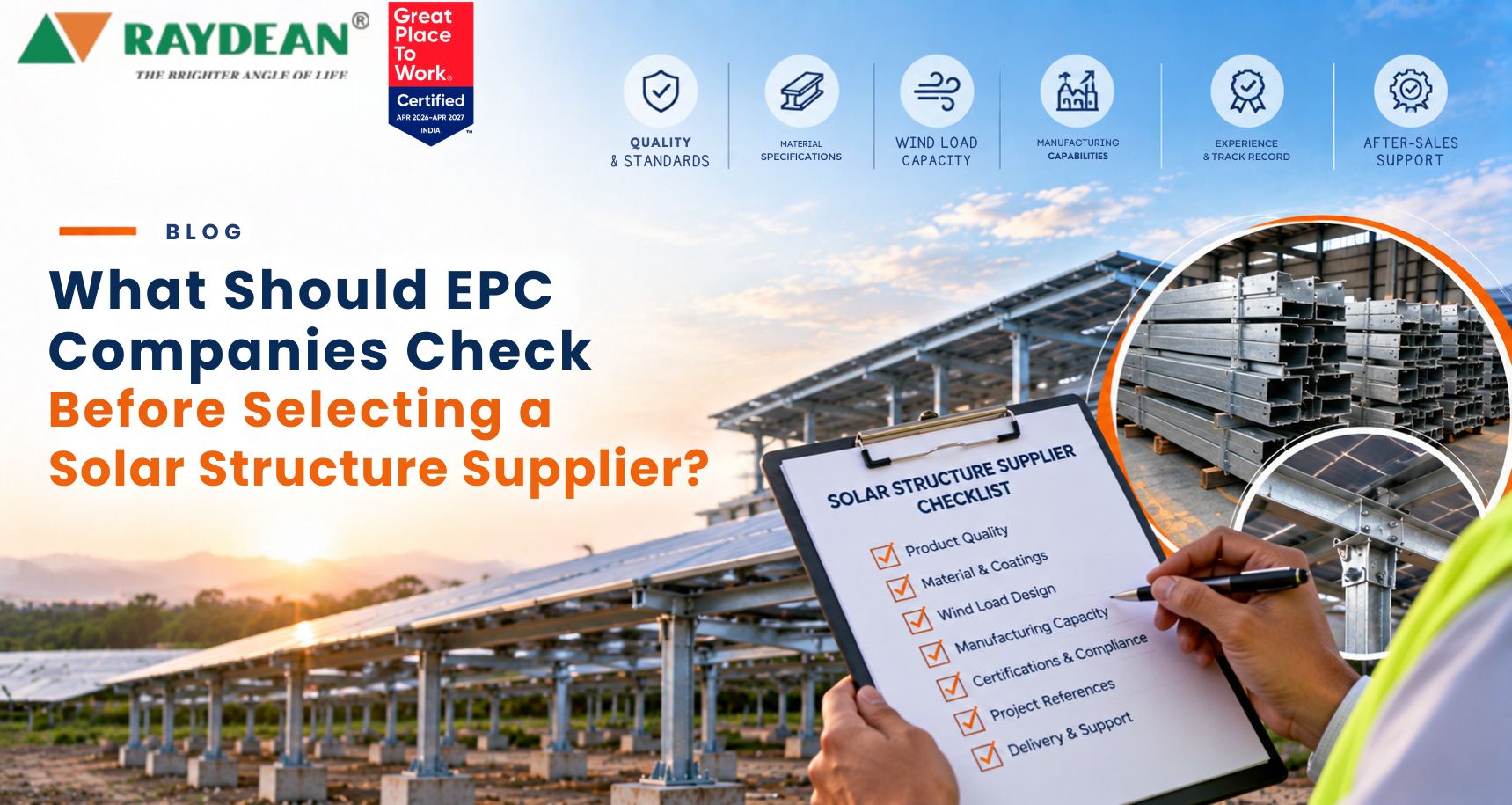
What Should EPC Companies Check Before Selecting a Solar Structure Supplier?
-

-

-

No Comments


What Should EPC Companies Check Before Selecting a Solar Structure Supplier?
Selecting the right solar structure supplier is a critical decision for every solar EPC company. A solar mounting structure supports the entire photovoltaic system, influences installation efficiency, and helps ensure long-term stability under changing weather conditions. Choosing an unsuitable supplier can lead to project delays, unexpected costs, structural issues, and higher maintenance requirements.
For EPC companies, the ideal supplier should offer more than competitive pricing. Structural quality, engineering expertise, material specifications, manufacturing capacity, and timely delivery are equally important. Whether you are developing a rooftop installation or a large-scale solar power plant, evaluating these factors can help you select a reliable manufacturing partner.
This guide explains what EPC companies should check before selecting a solar structure supplier in India.
1. Check Material Quality and Structural Strength
Material quality directly affects the durability, load-bearing capacity, and service life of solar mounting structures. EPC companies should verify whether the supplier uses materials suitable for the project’s environmental conditions and structural requirements.
Before finalizing a supplier, check:
- Steel grade and material thickness.
- Galvanization quality and corrosion resistance.
- Compliance with applicable material and structural standards.
- Load-bearing capacity and connection strength.
- Material inspection reports and quality documentation.
A dependable Solar Structure Manufacturer in India should provide clear material specifications and quality records. For steel structures, appropriate corrosion protection is particularly important in humid, coastal, industrial, and high-rainfall environments.
2. Evaluate Engineering and Design Capabilities
Every solar project has different technical requirements. Roof type, soil conditions, wind speed, panel configuration, terrain, and project location can influence the mounting structure’s design.
EPC companies should assess whether the supplier can provide:
- Project-specific structural design and engineering support.
- Wind-load and dead-load calculations.
- Suitable foundation and anchoring recommendations.
- Detailed fabrication drawings and installation guidance.
- Designs that meet applicable building codes and project specifications.
An experienced EPC Steel Structure Manufacturer understands that structural design must balance safety, material efficiency, constructability, and long-term performance.
3. Compare Rooftop and Ground-Mounted Solar Structures
The right structure depends on the installation environment. EPC companies should confirm that the supplier has experience with the specific mounting system required for their project.
Best Solar Mounting Structure for Rooftop Projects
Rooftop systems must account for existing roof strength, waterproofing, available space, and wind uplift. The structure should be compatible with the roof type, whether it is a metal sheet roof or an RCC roof.
When selecting the best solar mounting structure for rooftop installations, consider lightweight design, secure anchoring, corrosion protection, ease of installation, and minimal roof penetration where technically appropriate.
Best Ground-Mounted Solar Structures
Ground-mounted solar projects require careful consideration of soil conditions, foundation design, wind exposure, site grading, and maintenance access. The best ground-mounted solar structures should offer adequate structural stability, efficient installation, suitable ground clearance, and durability under local environmental conditions.
EPC companies should also evaluate whether the design supports the planned module layout and allows convenient inspection and maintenance throughout the project’s operating life.
4. Verify Manufacturing Capacity and Quality Control
A supplier’s manufacturing capacity can directly affect project timelines, especially when handling utility-scale installations or multiple projects simultaneously.
Before placing an order, evaluate the manufacturer’s production infrastructure, fabrication processes, inspection procedures, and ability to meet delivery commitments.
Important questions include:
- Can the manufacturer handle your required order quantity?
- Are fabrication and galvanization processes properly controlled?
- Does the company inspect dimensions, welds, coatings, and finished components?
- Can it provide consistent quality across different production batches?
- Does it have a documented process for handling defects and replacements?
A reliable Solar Structure Manufacturer in Jaipur or another manufacturing hub should demonstrate production consistency and transparent quality-control practices.
5. Assess Compliance, Testing, and Documentation
Structural safety should never depend on verbal assurances alone. EPC companies should request technical documents that demonstrate the suitability of the proposed mounting system.
Depending on project requirements, these may include:
- Structural design calculations and drawings.
- Material test certificates.
- Galvanization or coating inspection reports.
- Applicable test reports and conformity documentation.
- Installation manuals and product specifications.
- Warranty terms and inspection records.
Check the relevance of each certificate to the actual product being supplied. Applicable Indian Standards, project specifications, and local building requirements should guide the verification process.
6. Compare Total Project Cost, Not Just Purchase Price
The lowest quotation may not provide the best overall value. A cheaper structure can increase installation time, transportation expenses, material wastage, or maintenance costs.
EPC companies should compare quotations based on material specifications, coating thickness, fabrication quality, packaging, transportation, installation requirements, and warranty coverage.
| Evaluation factor | What EPC companies should check |
| Material | Steel grade, thickness, and specifications |
| Protection | Galvanization quality and corrosion resistance |
| Engineering | Design calculations and project suitability |
| Manufacturing | Capacity and quality-control processes |
| Logistics | Delivery schedule and transportation costs |
| After-sales support | Technical assistance and warranty terms |
A transparent quotation makes it easier to compare suppliers on an equal basis and estimate the total cost of project execution.
7. Check Delivery Reliability and Technical Support
Solar EPC projects often operate under strict commissioning schedules. Delayed structure deliveries can disrupt installation teams, equipment deployment, and project handover.
Choose a Solar Structure Supplier that provides realistic lead times, clear dispatch schedules, secure packaging, and responsive communication.
Technical support is equally valuable. The supplier should be able to address installation queries, resolve component discrepancies, and provide replacement parts when required.
An experienced EPC Infrastructure Manufacturer can contribute to smoother project coordination by aligning manufacturing, documentation, and delivery with the EPC company’s execution plan.
8. Review Industry Experience and Project References
Past project experience helps EPC companies understand a supplier’s ability to meet real-world requirements. Ask for relevant project references, completed installation details, and examples of similar structures supplied.
Evaluate whether the supplier has experience with comparable project sizes, environmental conditions, mounting systems, and delivery schedules.
If you are searching for the Best Solar Mounting Structures, prioritize demonstrated engineering capability, consistent quality, and dependable execution over marketing claims alone.
For businesses evaluating a Solar Structure Manufacturer in India, regional manufacturing options can also be considered when they offer logistical advantages, suitable production capacity, and reliable technical support.
Why Choose the Right Solar Structure Manufacturing Partner?
The right manufacturing partner helps EPC companies reduce procurement risks, maintain installation schedules, and improve structural reliability. A supplier with strong engineering, controlled manufacturing, and dependable delivery can support projects from initial planning through installation.
Raydean aims to serve the solar infrastructure market with a focus on structural solutions and manufacturing requirements. When evaluating Raydean or any potential supplier, discuss your project specifications, material requirements, quantities, delivery timelines, and documentation needs to determine the right solution for your application.
Conclusion
Choosing a solar structure supplier requires a comprehensive evaluation of material quality, engineering expertise, manufacturing capacity, compliance, pricing, delivery, and technical support. EPC companies should assess these factors before making a procurement decision rather than relying solely on the lowest quotation.
Whether you need rooftop mounting systems or large-scale ground-mounted structures, working with a capable manufacturing partner can improve project planning, installation efficiency, and long-term structural performance.
Looking for a reliable solar structure manufacturing partner for your next project? Contact Raydean to discuss your solar mounting structure requirements and explore a solution aligned with your project’s technical and commercial needs.
Frequently Asked Questions (FAQs)
1. What should EPC companies check before selecting a solar structure supplier?
EPC companies should evaluate material quality, structural design, corrosion protection, manufacturing capacity, quality certifications, delivery reliability, pricing, and after-sales support. Project-specific engineering and documentation are essential for making an informed decision.
2. How do I choose the best solar mounting structure for rooftop installations?
Choose a structure compatible with the roof type, building load capacity, wind conditions, panel layout, and waterproofing requirements. Verify anchoring details, corrosion protection, and structural calculations before installation.
3. What is the difference between rooftop and ground-mounted solar structures?
Rooftop structures are designed for installation on existing buildings and must account for roof strength and waterproofing. Ground-mounted structures use foundations anchored into the soil and require consideration of soil conditions, site grading, wind loads, and maintenance access.
4. Why is material quality important when selecting a Solar Structure Manufacturer in India?
Material quality affects structural strength, corrosion resistance, durability, and maintenance requirements. EPC companies should verify steel specifications, material thickness, galvanization quality, and relevant test documentation before approving a supplier.
5. How can EPC companies compare quotations from solar structure suppliers?
Compare quotations using consistent specifications for materials, structural design, coating, manufacturing quality, transportation, delivery timelines, warranty, and technical support. Evaluating the total project cost provides a more meaningful comparison than purchase price alone.
To Know More: How Are Solar Mounting Structures Designed for High-Wind Areas in India
Categories
- All (15)
- HDG Structure (1)
- Pre Galvanized Structure (1)
- Rooftop Solar Structure (2)
- Solar Mounting Structure (7)
- Transmission Towers (2)
- Telecom Tower (2)
- EPC (2)
- PM Surya Ghar Yojhna (1)