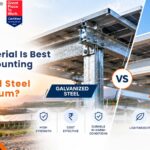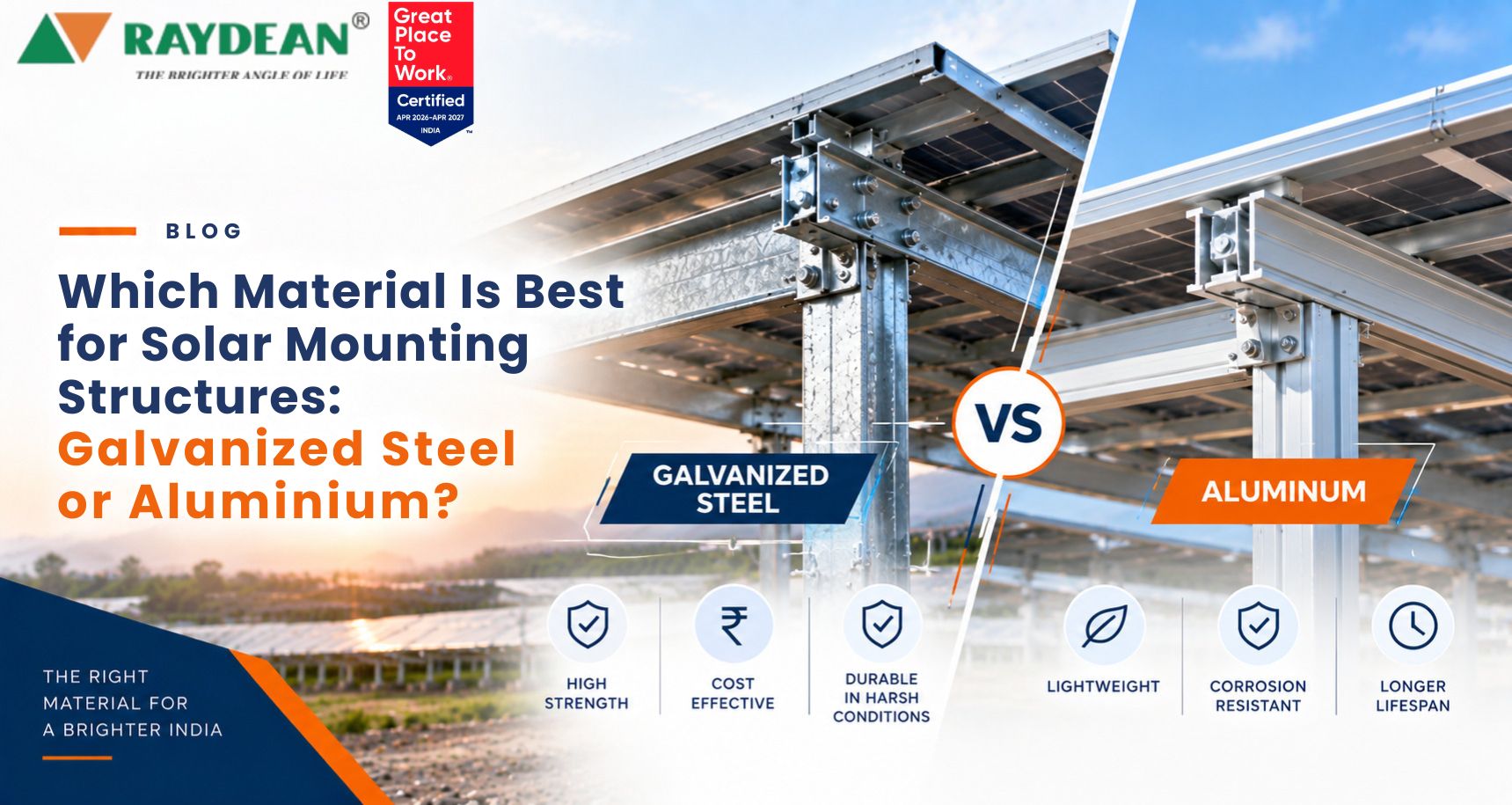
Which Material Is Best for Solar Mounting Structures: Galvanized Steel or Aluminium?
-

-

-

No Comments
Which Material Is Best for Solar Mounting Structures: Galvanized Steel or Aluminium?
Introduction
Choosing the right material is essential for building a durable, safe, and cost-effective solar power system. A solar mounting structure supports photovoltaic (PV) panels, keeps them at the correct angle, and helps them withstand wind, rain, and other environmental conditions. Both materials offer distinct advantages. Galvanized steel is known for its strength, structural stability, and suitability for large installations. Aluminium is lightweight and naturally corrosion-resistant, making it attractive for many rooftop applications.
The best choice depends on your project size, installation location, budget, roof capacity, and long-term maintenance requirements. Understanding these factors can help you select the Best Solar Mounting Structures for reliable performance and long-term value.
What Are Galvanized Steel and Aluminium Solar Mounting Structures?
Galvanized Steel Solar Structures
Galvanized steel structures are manufactured from steel coated with zinc to protect the underlying metal against corrosion. The zinc coating acts as a protective barrier and provides additional corrosion protection.
These structures are widely used in commercial, industrial, utility-scale, and ground-mounted solar projects because steel offers high strength and stiffness. Hot-dip galvanized steel is a common choice for outdoor installations, provided the coating specification and fabrication quality suit the site’s environmental conditions.
Aluminium Solar Structures
Aluminium solar mounting structures are made from aluminium alloys designed for structural applications. Aluminium has a lower density than steel and naturally forms a protective oxide layer that helps resist corrosion.
Its lightweight properties can simplify handling and installation. Aluminium is frequently considered for rooftop solar systems, especially where minimizing additional roof loads is important. However, the final design must still account for wind uplift, connection strength, and the roof’s load-bearing capacity.
Galvanized Steel vs Aluminium: Key Differences
The following table highlights the main differences between these two materials.
| Comparison Factor | Galvanized Steel | Aluminium |
| Strength and stiffness | Generally higher for comparable member sizes | Lower stiffness; section design is important |
| Weight | Heavier | Significantly lighter |
| Corrosion resistance | Depends on zinc coating quality and thickness | Naturally corrosion-resistant |
| Initial material cost | Often economical for large projects | Material cost can be higher |
| Installation | May require more handling effort | Often easier to handle |
| Rooftop suitability | Suitable when roof loads are properly assessed | Often attractive for lightweight rooftop designs |
| Ground-mounted projects | Well suited to large and utility-scale installations | Suitable for appropriately engineered applications |
| Maintenance | Depends on coating condition and environment | Depends on alloy, connections, and exposure |
| Long-term performance | Strong when correctly specified and protected | Excellent when correctly designed for the environment |
Key takeaway: Galvanized steel is often preferred for strength and large-scale structural applications, while aluminium is attractive when low weight and corrosion resistance are priorities. Neither material is universally better for every solar installation.
1. Strength and Structural Stability
Strength is a major consideration when selecting solar mounting materials. Steel generally provides high strength and stiffness, making it suitable for long spans, large installations, and structures exposed to demanding wind conditions.
Galvanized steel can be a practical option for industrial rooftops, solar farms, and other projects requiring robust support systems. However, member thickness, profile geometry, connection design, and foundation conditions remain critical.
Aluminium can also provide reliable structural performance when the correct alloy and profile are selected. Because aluminium is less stiff than steel, designers may need larger sections or different structural configurations to control deflection.
For both materials, engineering calculations and site-specific wind-load assessments are essential.
2. Corrosion Resistance and Durability
Solar mounting structures remain exposed to sunlight, moisture, temperature changes, and environmental pollutants for many years.
Galvanized steel relies on its zinc coating for corrosion protection. The coating specification, surface preparation, cut edges, and fabrication methods influence its service life. Coastal environments and industrial locations may require additional corrosion protection.
Aluminium naturally develops an oxide layer that helps protect it from corrosion. However, aluminium is not immune to environmental damage. Contact with dissimilar metals, unsuitable fasteners, and certain chemical environments can cause corrosion problems.
In either case, selecting the correct material and protective system for the installation environment is essential for long-term durability.
3. Cost and Installation Efficiency
Project cost includes more than the price of raw materials. It also covers fabrication, transportation, installation labor, foundations, maintenance, and replacement requirements.
Galvanized steel can offer cost advantages in large projects because of its strength and availability in a wide range of structural profiles. Its weight may, however, increase transportation and handling requirements.
Aluminium may cost more per unit of material, but its lower weight can simplify logistics and installation. For rooftop systems, the potential reduction in structural load can be beneficial, although the actual benefit depends on the complete system design.
The most economical option is the one that delivers the required structural performance and service life at the lowest overall project cost.
4. Which Material Is Best for Rooftop Solar Systems?
The best solar mounting structure for rooftop installations depends on roof capacity, building design, wind exposure, and the mounting system.
Aluminium can be an excellent choice for lightweight rooftop systems, particularly when easy handling and corrosion resistance are priorities. Galvanized steel is also widely suitable for commercial and industrial rooftops where higher structural strength or specific support configurations are required.
Before selecting either material, evaluate:
- The roof’s load-bearing capacity.
- Local wind speed and wind-uplift requirements.
- Roof type, slope, and waterproofing details.
- Corrosion exposure and expected service life.
- Compatibility of fasteners and other components.
A professionally engineered structure helps protect both the solar panels and the building.
5. Which Material Is Best for Ground-Mounted Solar Projects?
For many large ground-mounted installations, galvanized steel is a strong practical choice because it offers structural stiffness, adaptable designs, and compatibility with a range of foundation systems.
The best ground-mounted solar structures must accommodate site conditions, wind loads, soil properties, terrain, drainage, and maintenance access. Galvanized steel is often suitable for utility-scale solar farms and large commercial installations.
Aluminium can also be used for ground-mounted systems where its material properties and cost are appropriate. The decision should be based on engineering requirements and lifecycle economics rather than material weight alone.
How to Choose the Right Solar Structure Manufacturer in India
Working with an experienced manufacturer can help ensure that the mounting system meets project specifications and applicable standards.
When evaluating a Solar Structure Manufacturer in India, consider:
- Material quality: Confirm the steel grade, aluminium alloy, and protective coating specifications.
- Engineering capability: Ask about structural calculations, wind-load design, and site-specific customization.
- Manufacturing quality: Review fabrication tolerances, finishing, and quality-control processes.
- Corrosion protection: Check whether the proposed coating or surface treatment suits your installation environment.
- Project suitability: Ensure the manufacturer can supply structures for your rooftop or ground-mounted requirements.
If you are comparing suppliers, a Solar Structure Manufacturer in Jaipur may be a convenient option for projects in Rajasthan and nearby regions. Buyers looking for a Galvanized Steel Structure Manufacturer should also verify coating quality, product specifications, and relevant project experience.
Choosing a reliable solar mounting structure manufacturer in India helps you assess technical suitability, installation requirements, and long-term value before committing to a system.
Conclusion: Galvanized Steel or Aluminium?
Galvanized steel and aluminium can both deliver dependable solar mounting solutions when selected and engineered correctly.
Galvanized steel is generally a strong option for large ground-mounted projects, demanding structural applications, and installations where stiffness and material economics are important. Aluminium is often attractive for rooftop systems where lower weight, easier handling, and corrosion resistance are priorities.
There is no single material that is best for every project. The right decision depends on site conditions, engineering requirements, total cost, and expected service life.
Planning a solar installation? Contact Raydean to discuss your project requirements and explore suitable solar mounting structure solutions. Choose a structure designed for dependable support, durability, and long-term solar performance.
Frequently Asked Questions (FAQs)
1. Which is better for solar mounting structures: galvanized steel or aluminium?
Galvanized steel is often preferred for strength, stiffness, and large ground-mounted projects. Aluminium is attractive for lightweight rooftop systems and corrosion-resistant applications. The best choice depends on project-specific engineering requirements.
2. Is galvanized steel suitable for rooftop solar panels?
Yes. Galvanized steel can be used for residential, commercial, and industrial rooftop solar systems. The structure must be designed to meet the roof’s load capacity, wind conditions, and corrosion-protection requirements.
3. Do aluminium solar mounting structures last longer than galvanized steel?
Not necessarily. Both materials can provide a long service life when correctly specified, manufactured, installed, and maintained. Environmental exposure, protective treatments, connection design, and installation quality affect durability.
4. Which material is more cost-effective for ground-mounted solar structures?
Galvanized steel is often cost-effective for large ground-mounted projects because of its strength and suitability for structural applications. However, the final cost depends on material prices, fabrication, foundations, transportation, installation, and maintenance.
5. How do I choose the best solar mounting structure manufacturer in India?
Look for a manufacturer with suitable material specifications, structural engineering expertise, quality-control procedures, corrosion-protection options, and experience with projects similar to yours. Compare complete technical proposals rather than choosing on price alone.
To Know More: What Should EPC Companies Check Before Selecting a Solar Structure Supplier?
Categories
- All (15)
- HDG Structure (1)
- Pre Galvanized Structure (1)
- Rooftop Solar Structure (2)
- Solar Mounting Structure (7)
- Transmission Towers (2)
- Telecom Tower (2)
- EPC (2)
- PM Surya Ghar Yojhna (1)